<iframe width="200" height="113" src="https://www.youtube.com/embed/tyRt4m-3_eA?feature=oembed&rel=0&autoplay=1" frameborder="0" allow="accelerometer; autoplay; clipboard-write; encrypted-media; gyroscope; picture-in-picture; web-share" referrerpolicy="strict-origin-when-cross-origin" allowfullscreen title="What is Sepsis? | Nursing Home Negligence Lawyer | Law Office of Kenneth Berger"></iframe>
What is Sepsis and What Causes It in Nursing Homes?
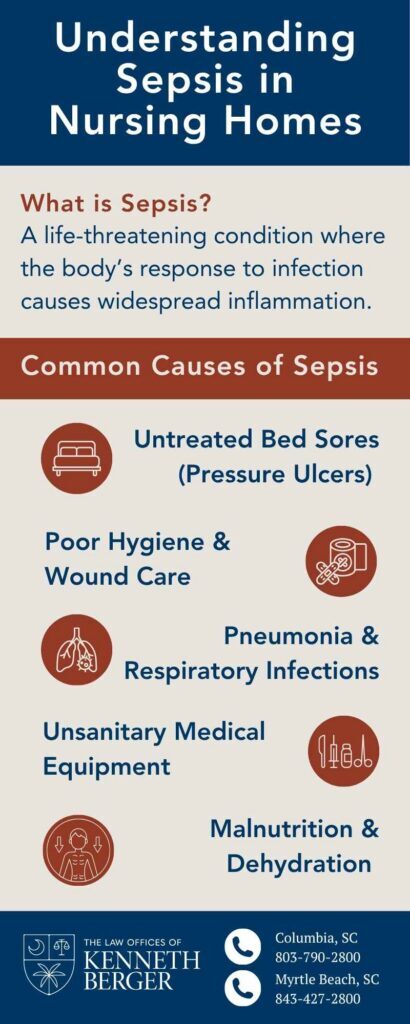 The medical community defines sepsis as a complication that occurs when chemicals released into the bloodstream to fight an infection trigger inflammation. In simple terms, sepsis means “blood poisoning.” So how does it happen? In some instances, sepsis occurs due to pneumonia. However, in other cases, sepsis arises due to repeated acts of negligence on the part of a nursing home, which in turn leads to bed sores and infection. Sepsis is marked by fever and increased heart rate. When undiagnosed or mistreated, it can progress to “septic shock,” which results in altered consciousness, trouble breathing, and low blood pressure. Once sepsis has been identified, it should be treated aggressively. Patients are often transferred to a hospital, where they receive a regimen of antibiotics. Some patients will also be given blood pressure medication and insulin. If the patient is in septic shock, life-saving measures including surgery, IVs, and ventilation may be necessary. South Carolina's elder care centers must take certain measures to reduce the likelihood of sepsis. First, patients’ rooms should always be properly cleaned and sterilized. Bacteria and infection has less chance to develop in a sanitized environment. Second, all invasive devices – including IV needles, ventilators, and catheters – must be 100% sterile before use. There is no reason for “line sepsis” to occur due to a dirty instrument. Third, patients who spend most of their day in bed ought to be constantly monitored to ensure they are not developing pressure ulcers. Skin breakdown greatly heightens the chance of infection.