<iframe width="200" height="113" src="https://www.youtube.com/embed/9sTsNHsm0ho?feature=oembed&rel=0&autoplay=1" frameborder="0" allow="accelerometer; autoplay; clipboard-write; encrypted-media; gyroscope; picture-in-picture; web-share" referrerpolicy="strict-origin-when-cross-origin" allowfullscreen title="South Carolina Nursing Home Lawyer Offers Free Resources | Nursing Home Negligence Lawyer"></iframe>
Signs and Symptoms of Dehydration in the Elderly
It can be difficult to tell if your older loved one is suffering from dehydration, but there are some signs that you can look out for when you visit. Mild dehydration occurs when about two percent of body weight is lost due to lack of fluid. Some of the symptoms of mild dehydration may include the following:- A dry mouth and tongue with unusually thick saliva
- Inability to urinate or infrequent urination
- Small quantities of dark colored urine
- Headaches or body cramps
- Inability to sleep
- Mood changes
- Inability to sweat or cry
- Constipation
- Dizziness or trouble walking
- Mental confusion
- Dangerously low blood pressure
- Fast heart beat (tachycardia)
- Shallow, rapid breathing
Major Causes of Dehydration in South Carolina Nursing Home Residents
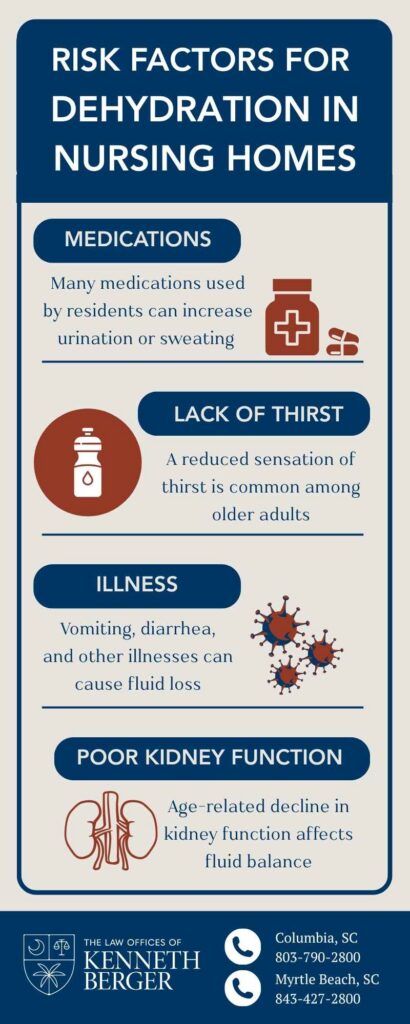 Aside from the fluid losses caused by everyday bodily functions, there are multiple risk factors in a nursing home that can lead to dehydration in the elderly. Some of these risk factors are:
- Medications. Many nursing home residents take medications that are diuretics. These drugs increase the frequency or volume of urination. Some medications may also cause excess sweating during the day or at night (night sweats).
- Lack of thirst. With age comes not only a decreased sense of hunger, but a decreased sense of thirst, too. Without routine monitoring by staff, an elderly person might not even realize that the reason he or she is suffering is because of low fluid intake.
- Illness. Any illness or infection that causes vomiting or diarrhea, including foodborne illnesses, can rapidly result in severe dehydration if not treated appropriately. Diseases such as diabetes or chronic kidney disease (CKD) can cause fluid balance issues, too.
- Poor kidney function. The kidneys are responsible for filtering wastes from the blood and helping bodies keep a good fluid balance. With age and illness, the kidneys can lose function over time, resulting in more frequent urination.
How to Help Prevent Dehydration
Even a simple step like ensuring that your loved one always has a water bottle or cup near his or her favorite spot, or on the bedside table, can make a difference. Be sure to raise your concerns with your loved one’s care team as well, as they can monitor his or her hydration. By working together, you and the staff can ensure that your loved one is protected from dehydration, and getting as much fluid as is needed to remain as healthy and happy.Get Legal Help for Nursing Home Neglect in Columbia, SC
A nursing home or care facility is supposed to be an environment of trust and support for your elderly loved one, providing care and support above and beyond what most families can manage on their own. If you suspect that trust has been breached and your loved one has been harmed by dehydration and neglect in a nursing home, get the help that you need and seek out an attorney who understands how to protect the rights of the elderly. For a free consultation about the legal situation of your elderly loved one, reach out to the Law Office of Kenneth E. Berger by phone, live chat, or email today.| Related Links: |