<iframe width="200" height="113" src="https://www.youtube.com/embed/VbbrVGnPAjo?feature=oembed&rel=0&autoplay=1" frameborder="0" allow="accelerometer; autoplay; clipboard-write; encrypted-media; gyroscope; picture-in-picture; web-share" referrerpolicy="strict-origin-when-cross-origin" allowfullscreen title="Signs of Nursing Home Abuse in Myrtle Beach | Nursing Home Neglect Attorney Kenneth Berger"></iframe>
- 4 Types of Elder Abuse in South Carolina
- Signs of Nursing Home Abuse
- What is Considered Nursing Home Neglect
- How Long Do You Have to File a Lawsuit Against a Nursing Home?
- How to Report Abuse or Neglect at a Nursing Home in Myrtle Beach
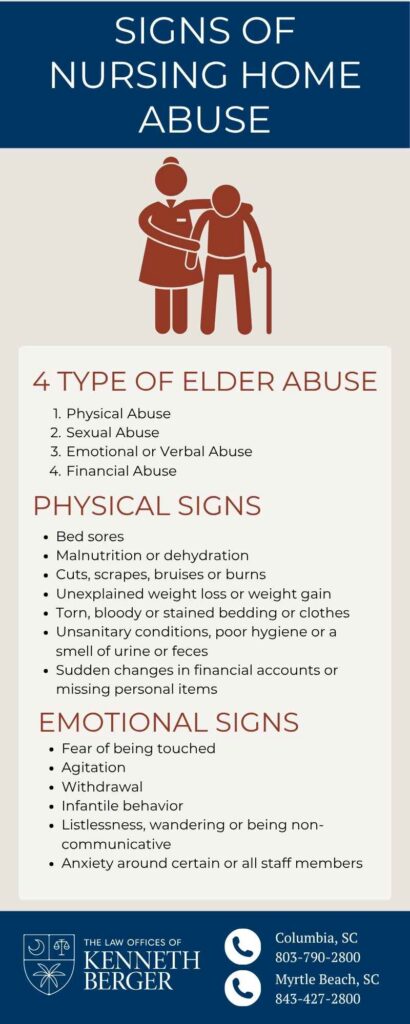 4 Types of Elder Abuse in South Carolina
Senior abuse is more common than expected. One 2015 study in the New England Journal of Medicine found that as much as 10 percent of the elderly population has experienced some form of abuse. Unfortunately, various types of abuse and neglect take place in Myrtle Beach nursing homes, each one as egregious as the next. It is important to understand the different forms, not only to protect your loved one but also to stop the abuser and help other South Carolina nursing home residents. Here are the most common types of elder abuse:
- Physical abuse. When caretakers are physically violent with the elderly, it is perhaps one of the most obvious forms of harm. Any act of striking or hitting an elderly person, pushing, shoving, or otherwise acting to cause physical harm is considered physical abuse. Victims are often reluctant to speak out about physical harm, and may offer excuses or conflicting reasons for injuries, when the reality is that an aggressive caregiver is the problem.
- Sexual abuse. The elderly are often physically vulnerable and unable to fend off unwanted molestation. The victims may have bruising on the chest or genital regions, bleeding, or new and otherwise unexplainable difficulty standing up or walking. Victims of sexual acts often become withdrawn and depressed as well.
- Emotional or verbal abuse. This type of damage is more insidious than physical violence, as it doesn’t leave marks on the skin, but may be just as harmful to the victim. Verbal aggression, insults, and threats directed at the victim are just a few examples. You may notice that a victim of emotional or verbal abuse is frightened of or intimidated by the aggressor. Emotional abuse can also involve intentionally isolating the victim from friends and family, leaving him or her to suffer alone and in silence.
- Financial abuse. Fraudulently taking advantage of an elderly person’s finances is another common form of exploitation. Caregivers may use the victim’s checkbook, credit cards, or other accounts to siphon off money either without consent or by deception. He or she may pressure the victim or outright lie to get the victim to sign documents, including powers of attorney. Identity theft is also rising at alarming rates. Less sophisticated theft may involve simply stealing cash or other physical assets over time.
Signs of Nursing Home Abuse
Physical Signs of Elder Abuse
The CDC estimates hundreds of thousands of adults over 60 experience abuse or neglect every year in the United States. Make sure you are aware of the potential red flags and warning signs, including:- Bed sores
- Hair loss
- Malnutrition or dehydration
- Cuts, scrapes, bruises or burns
- Head injuries or broken bones
- Unexplained infections or sexually transmitted diseases
- Unexplained weight loss or weight gain
- Torn, bloody or stained bedding or clothes
- Unsanitary conditions, poor hygiene or a smell of urine or feces
- Sudden changes in financial accounts or missing personal items
Emotional Signs of Elder Abuse
An abused elderly patient may exhibit the following behaviors after suffering emotional abuse:- Fear of being touched
- Agitation
- Withdrawal
- Infantile behavior
- Unresponsiveness
- Listlessness, wandering or being non-communicative
- Anxiety around certain or all staff members