After a car accident in South Carolina, you should:
- Move to a safe place and check for injuries
- Call 911 so police and medical help can respond
- Exchange information with the other driver and get witness contact details
- Take photos of the vehicles, the scene, and your injuries
- Avoid apologizing or admitting fault
- See a doctor as soon as possible, even if you feel fine
- Notify your own insurance company
- Return your FR-10 form to your insurance company so it can be filed with the SC DMV
- Think carefully before giving a recorded statement to the other driver's insurance company
- Talk with a car accident attorney if you were hurt
This guide walks through each step in more detail, explains how fault, insurance, and medical bills work in South Carolina, and helps you decide whether you need a lawyer.
Seriously injured in a crash? You don't have to navigate this on your own. Call our office for a free consultation at 803-790-2800 (Columbia) or 843-427-2800 (Myrtle Beach). You owe no attorney fees or case costs unless we recover money for you.
Want to keep this handy? Download our free e-book, Safety First, Justice Always: Your Guide to South Carolina Auto Accident Law.
Table of contents
- What Should I Do at the Scene of a Car Accident?
- What Should I Do in the Days After a Crash?
- How Is Fault Determined After a Car Accident in South Carolina?
- The South Carolina Collision Report (TR-310) and FR-10 Form
- Dealing With Insurance Companies After a Car Accident
- Who Pays My Medical Bills After a Car Accident?
- What If the Other Driver Has No Insurance or Not Enough?
- Can I Get Compensation for Property Damage?
- What Compensation Can I Recover for Car Accident Injuries?
- How Long Do I Have to File a Car Accident Claim in South Carolina?
- How Long Does a Car Accident Claim Take?
- Crashes That Call for Extra Care
- Do I Need a Lawyer After a Car Accident?
- How Much Does a Car Accident Lawyer Cost?
- What It's Like to Work With Our Firm
- Frequently Asked Questions After a South Carolina Car Crash
What Should I Do at the Scene of a Car Accident?
The first few minutes after a crash matter for your safety and for any claim that follows.

- Get to safety. If you're able, move the vehicles out of traffic to the shoulder or a nearby parking lot. Turn on your hazard lights and stay away from passing cars.
- Call 911. If anyone may be hurt, ask for an ambulance. When in doubt, call anyway. Always ask for police to respond, even for a minor crash, so an official report is made.
- Exchange information. Get the other driver's name, phone number, driver's license number, license plate, insurance company, and policy number. Note the make, model, and year of their vehicle.
- Get witness information. Ask anyone who stopped to help for their name and phone number. Witnesses often leave before police arrive.
- Note the location. On the interstate, look for the nearest mile marker or exit. In town, note cross streets, businesses, or addresses.
- Take photos. Photograph every vehicle from several angles, the road, traffic signals, skid marks, weather conditions, and any visible injuries.
- Don't apologize or admit fault. Saying "I'm sorry" is a natural reaction, but it can be treated as an admission of fault later.
- Pay attention to the other driver. Do you smell alcohol? Are they slurring their words or stumbling? Did they say they were looking at their phone or "only looked away for a second"? Tell the officer what you notice. It can matter if the crash involved drunk driving or distracted driving.
What Should I Do in the Days After a Crash?
What you do in the first few days can affect both your recovery and your claim.
- See a doctor within a day or two, even if you felt fine at the scene. Adrenaline can mask pain, and some serious injuries take time to show symptoms.
- Follow your treatment plan. Go to follow-up appointments and physical therapy. Gaps in treatment are often used to argue that you weren't really hurt.
- Get reasonable and necessary care, and nothing more or less. Some people believe that running up medical bills leads to a bigger recovery, or that avoiding treatment helps. Neither is true. Get the care your doctor recommends.
- Report the crash to your own insurance company. Most policies require it, even when you weren't at fault.
- Return your FR-10. Give the form the officer handed you to your insurance company so it can be completed and filed with the SC DMV.
- Be cautious with the other driver's insurance company. You are generally not required to give them a recorded statement. It's best to talk with an attorney first. Here's more on how to deal with insurance adjusters.
- Read before you sign. Some medical authorization forms give the insurance company access to your entire medical history. Learn what to know before signing a medical authorization.
- Keep records. Save medical bills, receipts, pay stubs showing missed work, and every letter or email about the crash.
- Keep a simple journal. Write down your pain levels, missed activities, and tasks you need help with. It helps show how the injury affects your daily life.
- Be careful on social media. Insurance companies may review public posts. Consider setting accounts to private until your claim is resolved.
Warning Signs of a Hidden Injury
Call your doctor if any of these appear in the days or weeks after a crash:
- Headaches, dizziness, confusion, memory problems, or trouble concentrating, which can be signs of a concussion or traumatic brain injury
- Neck or back pain, numbness, or tingling in your arms or legs, which can point to whiplash or a bulging or herniated disc
- Chest pain, abdominal pain, or unusual bruising, which can signal internal injuries
- Changes in mood, sleep, or personality
These injuries are easy to dismiss at first, but they can have long-term effects on your health, your work, and your family.
How Is Fault Determined After a Car Accident in South Carolina?
Fault matters because it decides whose insurance pays for the damage. In a car accident, fault means careless or negligent driving that caused the crash, such as:
- Speeding or following too closely
- Driving under the influence
- Distracted driving, like texting
- Failing to yield or running a red light
- Rear-ending another vehicle
Here's how fault affects who pays:
- If the other driver was at fault, their liability insurance should pay for your medical expenses, lost wages, other losses, and vehicle repairs.
- If you were at fault, your liability insurance pays for the other driver's losses. Coverage like PIP or MedPay on your own policy may help with your medical bills.
- If fault is shared, South Carolina follows a modified comparative fault rule. You can recover damages as long as you are not more than 50 percent at fault, but your recovery is reduced by your share of the fault. If you are found more than 50 percent at fault, you cannot recover from the other driver.
Insurance companies make the first call on fault, but they don't always get it right. If you're being wrongly blamed, an attorney can investigate and gather evidence to show what really happened.
The South Carolina Collision Report (TR-310) and FR-10 Form
After a crash, you'll likely hear about two different forms. Here's the difference.
The collision report (TR-310). When police respond, the officer writes an official traffic collision report with details of the crash, witness statements, and other key information. It's filed with the SC DMV. The officer may note which driver they believe was at fault, but that opinion is generally not admissible in court, and it doesn't decide the outcome of your case.
Here's how to read each page of your collision report:
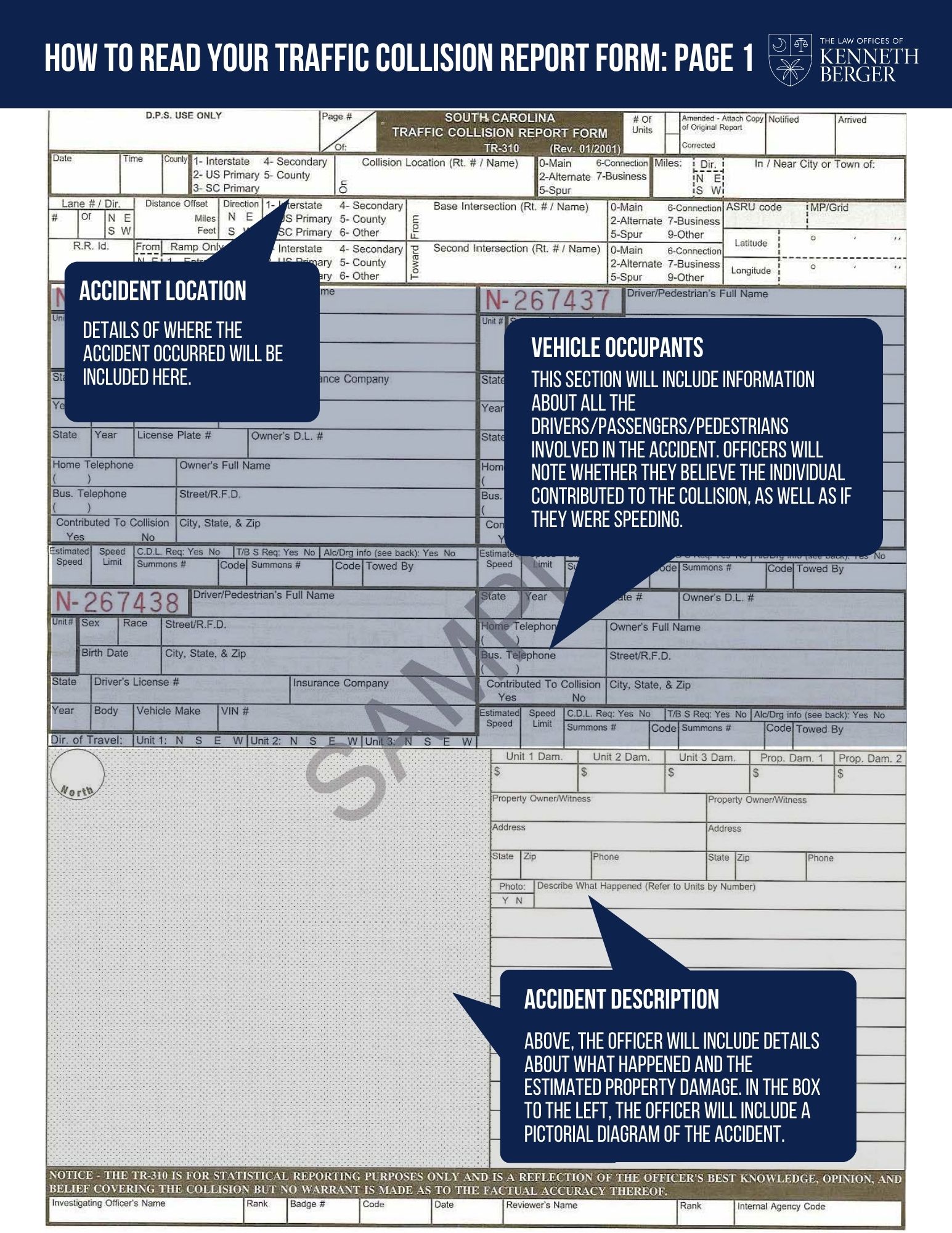
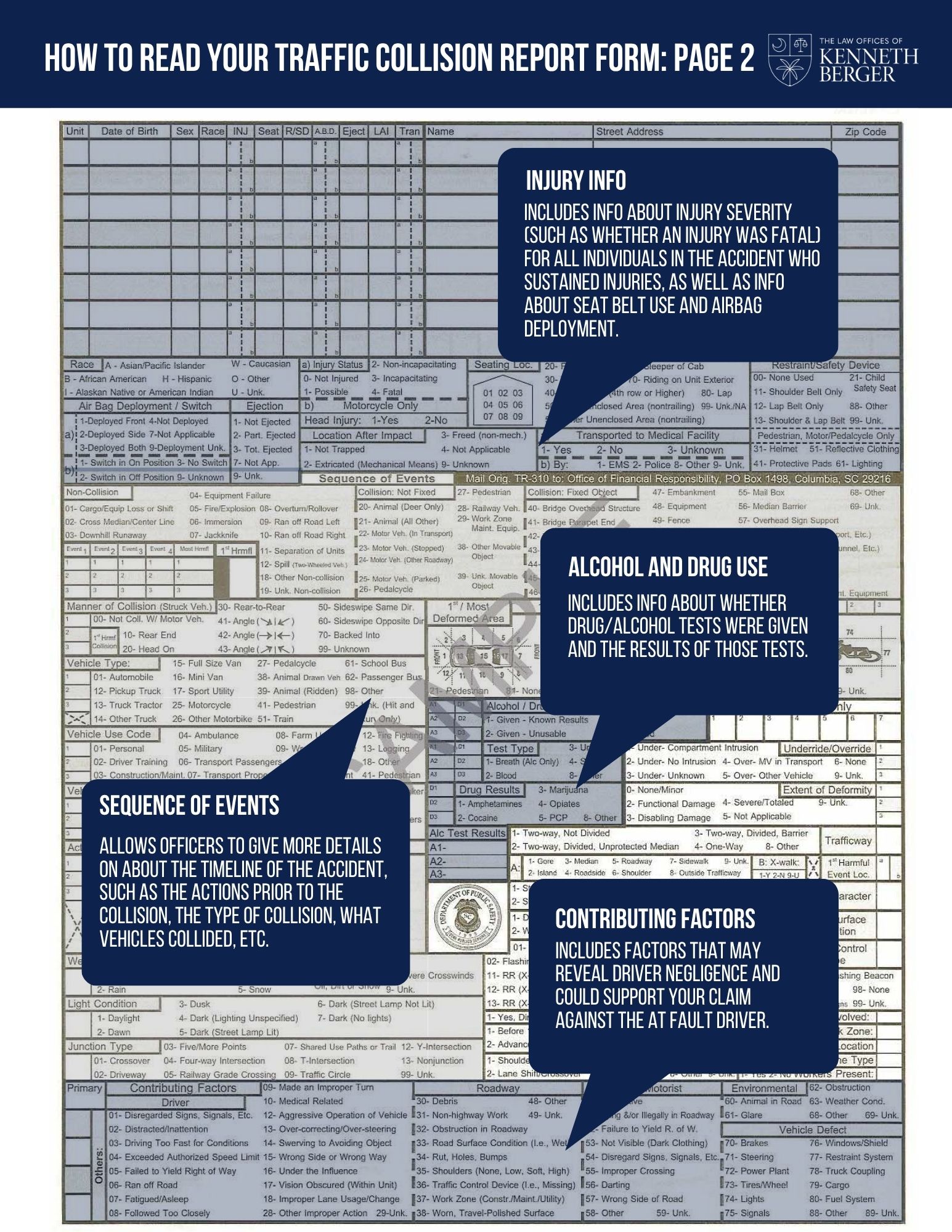
You won't automatically receive a copy of the report. You can request one from the SC DMV using a Request for Collision Report (FR-50). If you were seriously injured, it's worth having.
The FR-10. This is a one-page green form the officer gives you at the scene. It shows that you had insurance at the time of the crash. You sign it and give it to your insurance company, which completes it. The FR-10 must be returned to the SC DMV within 15 days of the accident, or your license and registration may be suspended.
Here's what each part of the FR-10 means:
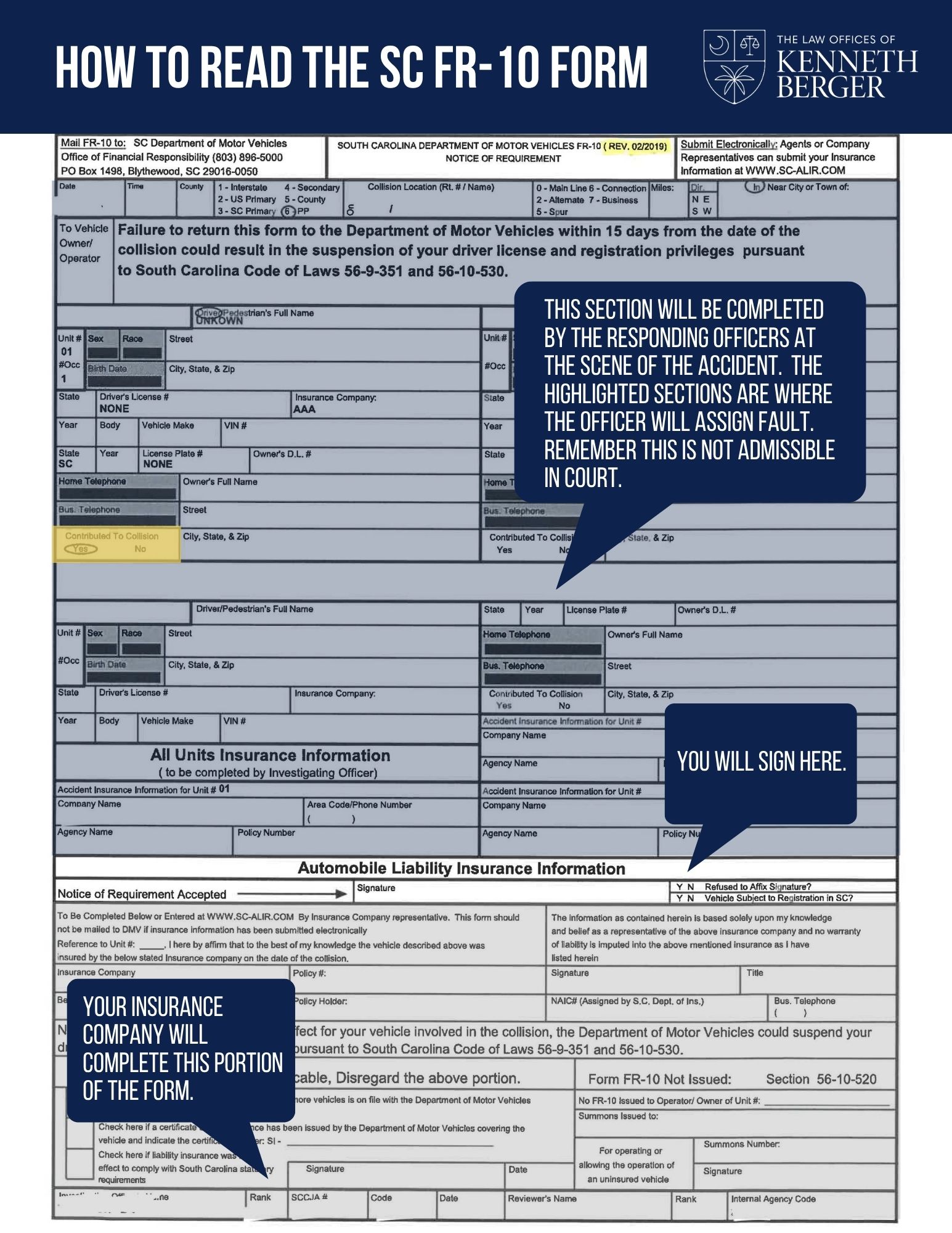
When our firm handles a case, we request the collision report and gather the rest of the evidence for you.
Dealing With Insurance Companies After a Car Accident
Should I call my insurance company if the accident wasn't my fault? Yes. Most policies require you to report every accident, and your own coverage may help with some expenses while your claim is pending.
Who do I file a claim with? If the other driver caused the crash, you'll usually file a claim with their insurance company. You don't need to feel guilty about filing a claim. That's what insurance is for.
What should I know before talking to the other driver's insurance company? Insurance companies are businesses, and adjusters are trained to resolve claims for as little as the company reasonably can. That doesn't make the adjuster a bad person, but it does mean their goals are different from yours. Early settlement offers to people without a lawyer are often far lower than what the insurance company is ultimately willing to pay. Learn more about common insurance company tactics and what you can do.
Who Pays My Medical Bills After a Car Accident?
Your health comes first. See whichever doctor you're most comfortable with and who can best treat your injuries, whether that's the emergency room, your primary care doctor, or a specialist. Here's help choosing between a doctor and a chiropractor and what to say to your doctor.
- Use your health insurance if you have it. Present your health insurance card when you get treatment. In South Carolina, the at-fault driver doesn't get a discount because your health insurance paid your bills. Your health insurer may ask to be paid back from your settlement, but an attorney can often negotiate those liens down.
- If you don't have health insurance, an attorney can help you get treatment and seek compensation to cover those costs. Money recovered through a settlement or verdict is used to pay those bills.
Here's more on who pays medical bills after a car accident.
What If the Other Driver Has No Insurance or Not Enough?
This happens more often than people expect, and you still have options.
Uninsured drivers. South Carolina requires every auto policy sold in the state to include uninsured motorist (UM) coverage. If an uninsured driver hits you, you may be able to recover through your own policy, a policy belonging to a relative you live with, or the policy on the vehicle you were riding in. In some cases, these policies can be stacked. Learn more about accidents with uninsured drivers.
Underinsured drivers. If the at-fault driver has insurance but not enough to cover your losses, underinsured motorist (UIM) coverage on your policy can help make up the difference. Here's what to know when you're hurt by a driver with minimum insurance limits.
Hit-and-run drivers. Your UM coverage may apply even if the driver is never found, but there are strict requirements, including reporting the crash to police. Learn more about hit-and-run accidents in South Carolina.
Passengers. If you were hurt as a passenger, you may have claims against more than one policy. Here's what injured passengers need to know.
Can I Get Compensation for Property Damage?
Yes. The at-fault driver's insurance company should pay to repair or replace your vehicle, and it may owe you for a rental car while yours is being repaired. If the at-fault driver was uninsured, your own policy will likely cover the damage.
Most people don't need a lawyer for a property damage claim alone, and our firm doesn't handle property-only claims. We're always happy to answer questions, though. Here's how to handle a property damage claim in South Carolina.
What Compensation Can I Recover for Car Accident Injuries?
South Carolina law aims to put you back in the position you were in before the crash, as much as money can. Depending on your case, you may be able to recover for:
- Medical expenses, both past and future
- Lost wages and loss of future earning ability
- Physical pain and suffering
- Emotional distress
- Loss of enjoyment of life
- Permanent injuries and scarring
- Property damage
When the at-fault driver's conduct was especially reckless, such as driving drunk, South Carolina law may also allow punitive damages.
A serious injury affects much more than your medical bills. It can mean missing time with your kids, needing help with everyday tasks, or living with pain. Those losses are real and belong in your claim. Learn more about the full range of damages and what goes into a car accident settlement.
How Long Do I Have to File a Car Accident Claim in South Carolina?
In South Carolina, most car accident injury claims must be filed within three years of the crash. Claims against a government entity, such as a crash involving a city or state vehicle, generally have a shorter deadline and extra requirements. Some exceptions can change these deadlines, so it's best to talk with an attorney early. Evidence like video footage and witness memories can disappear quickly.
How Long Does a Car Accident Claim Take?
Every case is different, but most follow the same general path:
- Treatment. You focus on getting medical care. It's usually best not to settle until you and your doctors understand the full extent of your injuries.
- Investigation. Your attorney gathers the collision report, photos, witness statements, and medical records.
- Demand. Once your treatment is complete or your doctors can predict your future care, your attorney sends a demand package to the insurance company.
- Negotiation. Many claims settle at this stage.
- Lawsuit, if needed. If the insurance company won't make a fair offer, filing a lawsuit is often what moves the claim forward. Here's what to expect after a lawsuit is filed.
A straightforward claim may resolve in months. Cases involving serious injuries or disputed fault usually take longer. Settling too quickly can mean leaving money on the table for care you'll need later.
Crashes That Call for Extra Care
Some crashes are more complicated from the start and benefit from getting an attorney involved early:
- Truck and commercial vehicle crashes often involve larger insurance policies, federal safety rules, and companies that start their own investigation right away.
- Drunk driving crashes may allow punitive damages and claims against bars or restaurants that over-served the driver.
- Uber and Lyft accidents involve rideshare insurance policies that depend on what the driver was doing at the time of the crash.
- Delivery vehicle crashes, including Amazon vans and trucks, can involve multiple companies and policies.
- Catastrophic injuries like brain injuries, spinal cord injuries, and amputations require careful planning for lifelong care.
- Fatal crashes may give surviving family members the right to bring a wrongful death claim.
- Red light and intersection crashes often come down to who had the green. Witnesses, photos, and video can decide the case. Here is what to do after red light accidents.
Do I Need a Lawyer After a Car Accident?
Not always. You probably don't need a lawyer if:
- No one was hurt and the only damage was to your vehicle (though some injuries don't show up for days or weeks)
- You saw a doctor and had no injuries
- The insurance company has offered enough to fully cover your medical bills, lost wages, and property damage
- You caused the crash and have insurance
It's a good idea to at least talk with an attorney if:
- You have serious injuries or growing medical bills
- You were hit by a drunk or distracted driver
- You were hit by a commercial truck, delivery vehicle, or rideshare driver
- The insurance company is delaying your claim, making a low offer, or blaming you for the crash
An attorney can investigate the crash, identify every source of insurance, work with experts to show how your injuries affect your life, negotiate your medical liens, and take your case to trial if needed. Here's more on choosing the right car accident lawyer.
How Much Does a Car Accident Lawyer Cost?
Our firm works on a contingency fee, which means you pay nothing up front. Our fee comes out of the money we recover for you, and if we don't recover anything, you owe no attorney fees or case costs. Our policy is that we never take more than our clients put in their own pockets at the end of a case. We explain our fees clearly at your first consultation. Here's more on how personal injury lawyers charge in South Carolina.
What It's Like to Work With Our Firm
We take a limited number of cases so each client gets our full time and attention. We take the time to learn what your life looked like before the crash and what it looks like now, because a full and fair recovery depends on the whole picture. We handle the insurance companies, paperwork, and deadlines so you can focus on healing, and we keep you informed at every step.
If you were seriously injured in a car accident, call our office for a free consultation. Reach our Columbia car accident team at 803-790-2800 or our Myrtle Beach car accident team at 843-427-2800.
Frequently Asked Questions After a South Carolina Car Crash
Get to safety, call 911, exchange information with the other driver, take photos, and see a doctor as soon as possible. Don't admit fault, and talk with an attorney before giving a recorded statement to the other driver's insurance company.
Yes. Call police to the scene so a collision report is made. You also need to return your FR-10 form within 15 days so it can be filed with the SC DMV.
Yes, as long as you were not more than 50 percent at fault. Your recovery is reduced by your share of the fault.
Most car accident injury claims must be filed within three years. Claims against government entities have shorter deadlines.
Yes. Some serious injuries, like concussions and back injuries, don't cause symptoms right away. Seeing a doctor early protects your health and documents your injuries.
Yes. Use your health insurance for treatment. Your health insurer may ask to be repaid from your settlement, but an attorney can often negotiate that amount down.